

What’s the Best Travel eSIM in 2025?

I’ve talked a lot about eSIMs in the last few years, as the number of phones that support them has increased dramatically, and the numberea of companies offering them has risen alongside.
In theory, the technology is a godsend for travelers who don’t want to spend a small fortune on international roaming. Rather than having to seek out somewhere at the airport or in town to buy a physical SIM card, you can simply buy an eSIM on your phone before or when you arrive in the country.
With a few exceptions, local carriers haven’t shown much interest in providing prepaid eSIM service to travelers. Sure, locals can sign up for an ongoing post-paid account, with all of the verification hassle and ongoing cost that accompanies it, but visitors wanting a local eSIM for a week or month? No dice.
That gap in the market has been well and truly filled, however, by other companies. Existing sellers of physical travel SIM cards have added eSIMs to their product line, and new eSIM marketplaces have sprung up where you can buy low-cost service for a few days, weeks, or longer.
It’s now at the point where for many travelers looking to stay connected on the cheap, the question isn’t whether they should use an eSIM, but which of the dozens of different companies selling eSIMs they should buy from.
Unsurprisingly, perhaps, that’s where I come in. I’ve used a wide range of eSIM products in my own travels around the world, for a variety of reasons. Sometimes I was only in the country a few days, sometimes it was to tide me over until I could find somewhere to buy a physical SIM, other times it was actually cheaper for the amount of data I needed.
While all of the eSIMs I’ve bought have fundamentally done what I wanted (getting me connected), there’s been a noticeable difference between them in how much it cost and how straightforward the process was.
As a result, I thought it was about time to put together some recommendations. As mentioned, I’ve bought and used eSIMs all over the world. For this article specifically, I also purchased an Australian eSIM from each company, then tested it in the same part of the city on the same phone for a fair comparison.
In general the speeds were related more to which local carrier’s network was being used than anything else, but even allowing for that, there was a fair amount of variation.
None of them were slow enough to be a concern, however: you could do anything you care about as a traveler using any of the providers.
Quick Summary
Choosing which providers to include from the long list of similar companies was always going to be a bit of a judgement call. To help narrow them down to a manageable number for testing, I started out by looking for competitive pricing, worldwide coverage, and good data speeds.
Before getting into the detail: while it’s impossible to summarize the thousands of available packages in a single table, I’ve tried to give a very high-level overview of the kinds of prices you might expect from each company.
To that end, I’ve chosen one country that sees a reasonable amount of international tourism on each continent except Antarctica, plus a regional and global option. I’ve then shown the cost in USD for a similar eSIM package (5GB for 30 days unless otherwise noted) from each of the services I tested.
If you’re looking for an eSIM for a specific trip, use my eSIM finder to figure out which is best. Just enter one or more countries that you plan to visit, and you’ll get the current options from all of the companies I personally use and recommend.
Most companies offer a range of validity periods and data allowances, but in some cases don’t sell anything close to 5GB/30 day package for a given country. When that’s the case, I’ve chosen a regional or global package if it exists, or marked it with a dash otherwise. A number in brackets refers to the number of countries and territories covered by that package.
As you can see, even at a high level, it’s a complicated situation! One other thing to note is that some companies offer a signup bonus where you get a discount off your first purchase. If you haven’t used that company before, you can take that amount off the price shown below.
- aloSIM: Use code TMA for $3 off your first purchase
- Airalo: Save up to 15% with codes ADAPT15 & ADAPT10
- Yesim: Use the code Adapter for €3 (approx $3.25) off your first purchase
- Instabridge: Use code TOOMANY20 for 20% off your first purchase
- Roamless: Use code TMA20 for 20% off your first purchase
|
🇮🇹 Italy |
🇹🇭 Thailand |
🇺🇸 USA |
🇿🇦 South Africa |
🇦🇺 Australia |
🇧🇷 Brazil |
🇪🇺 Europe |
🌍 Global | |
|---|---|---|---|---|---|---|---|---|
|
$14.50 |
$19 |
$16 |
$15.50 |
$12.50 |
$23.50 |
$20 (35) |
– | |
|
$14.50 |
$20 (18) |
$16 |
$15.50 |
$12.50 |
$18 |
$20 (42) |
$35 (138) | |
|
$6.90 |
$7.90 |
$6.90 |
$17.90 |
$7.90 |
$25.90 |
$9.90 (32)2 |
– | |
|
$122 |
$222 |
$142 |
$222 |
$262 |
$292 |
$18 (35)2 |
– | |
|
$14 |
$14 |
$13 |
$18 |
$12 |
$20 |
$14 (35) |
$36 (106) | |
|
$222 |
$24.202 |
$17.602 |
$46.202 |
$18.702 |
$222 |
$15.40 (33) |
$26.40 or PAYG (148) | |
|
$13 |
$21 |
$14 |
$58 |
$16 |
$27 |
$16 (36) |
– | |
|
$122 |
$72 |
$122 |
$202 |
$142 |
$262 |
$162 |
$50 (180+)2 | |
|
$12.25 |
$14.75 |
$12.25 |
$32.25 |
$12.25 |
$37.25 |
$12.25 (35)3 |
PAYG (186) | |
|
$12.50 |
$13.75 |
$13.75 |
$14.50 |
$10.75 |
$22.75 |
$21.50 (39)5 |
$12.50 (71)6 |
1 – Few or no 30 day/5GB plans
2 – 10GB/30 days
3 – Prices are when using PAYG credit: fixed-term plans are typically cheaper
4 – Credit is valid in 186 countries, 35 in Europe at this price
5 – 12GB/31 days
6 – 6GB/31 days
What Are the Benefits of eSIMs for International Travel?
Not everybody buys a new SIM when they travel: they simply roam with their provider from home instead. In some cases, that’s the right call: if you’re moving between countries in North America or the EU, for instance, there’s a high chance your cell company doesn’t charge you extra.
Elsewhere in the world, though, it can be a very different story. Costs can mount up very quickly, especially if you’re using a lot of data, to the point where it becomes prohibitive to take your phone out of flight mode.
For international travelers, one of the biggest benefits of eSIMs over buying physical local SIM cards is simply convenience. Rather than lining up with everyone else to buy an overpriced tourist SIM at the airport or not having a working phone until you get into town, you can be connected before you get off the plane.
Also, while dual SIM phones are on the rise, most of the time that either means one physical SIM slot and one eSIM, or in the case of recent Apple phones in North America, two eSIMs. Having two physical SIM slots in your phone is very rare in the United States, and becoming less common elsewhere in the world.
This means that by using a travel eSIM abroad, you can still leave your home SIM/eSIM installed and able to receive calls and texts. Turn off data roaming on that line, and in most cases you’ll just pay for the few calls and texts you make or receive. The usual caveats apply: check the details with your carrier!
What’s the Downside of eSIMs for International Travel?
The biggest issue with international eSIMs, at least for some people, is that most of them don’t come with a phone number. A few providers offer it, often only in certain countries, but if it’s something you absolutely require, you’ll definitely need to confirm before purchase.
These days, that’s far less of a problem for most travelers than it used to be. Many of us now do almost all of our text communication through apps like WhatsApp, iMessage, and Facebook Messenger rather than SMS, both because it’s free and because it’s more convenient for sending photos and videos.
Video calling friends and family is at least as common as voice calling when you’re overseas, and if you do need to call an actual phone number, you can do it for free or cheap with apps like Google Voice or Skype.
Even so, there are odd occasions when being able to be called on a local number is important, whether that’s for business reasons or just so your taxi driver can let you know they’re outside or running late. If having a local number is crucial for the way you travel, eSIMs may not be the right answer for you just yet.
In that case, take a look at physical international SIM cards instead. These are much more likely to include a phone number for voice and SMS alongside their data capability.
Does Your Device Support eSIM?
As with any eSIM product, the first step is to make sure your device actually supports it. Any iPhone from the XR/XS models onwards has eSIM built in, as does any Google Pixel phone released since 2017.
Most decent Samsung Galaxy phones do as well, along with a smattering of other phones and some tablets, laptops, and smartwatches. This list of eSIM devices is the most comprehensive I’ve found and is regularly updated, but still worth checking the specifications of your particular model if it isn’t listed.
Local, Regional, or Global?
Different companies take different approaches to how they offer eSIM service. Most provide a small range of options in each country where they operate, typically providing a certain amount of data for a week or a month.
If you’re only going to one country, or spending a decent amount of time in each of a handful of countries, this is likely to be the most cost-effective option.
Many providers also offer regional service, where one eSIM profile works in a number of different countries across a given region, again with a set amount of data for a certain period. Europe is an obvious one, but you’ll also find them for parts of Asia, North America, and elsewhere.
If you’re skipping from country to country reasonably quickly, and most or all of those countries are in a region covered by one of these packs, this will probably be cheaper and easier than buying individual country eSIMs.
Finally, a smaller number of companies offer global service. Usually it works much the same as the regional packs, with a certain amount of data provided (albeit often with a longer validity of up to a year).
One company also gives the option of a monthly subscription service instead, aimed at long-term travelers, while a couple have a simple Pay As You Go (PAYG) approach where you load your account with credit and use it as needed.
However they’re structured, these global packs are typically more expensive than local or regional varieties for most people, but not always. If you don’t use a lot of data and are traveling all around the world, they can definitely be worth a look.
Ok, time for the results!
aloSIM

AloSIM is one of the newer kids on the eSIM block, and provides service in over 200 countries and territories. Pricing tends to be very competitive in countries that see quite a bit of tourism, typically among the cheapest I’ve seen. You’ve also got the option of several regional packages, but no global ones.
Like most eSIM providers, purchasing and installation are very straightforward: pick your country and the data pack that suits, scan the QR code in your email or copy/paste the activation code, and you’re good to go.
Most aloSIM plans also include a free US or Canadian phone number that lasts as long the eSIM itself. It comes with a small amount of calling/texting credit, and you can buy more if you need it.
Based in Ottowa, Canada, I’ve had better support from aloSIM than most of the competition, both via 24/7 live chat and email. That means a better chance of getting a problem resolved quickly, at least if you can find an alternative internet connection to do it with!
With some of its regional packs, aloSIM splits up larger areas into different sub-regions. With Europe, for instance, while you’ve got a pack that covers essentially the entire continent, you’ve also got versions that cover UK and Ireland, Western Europe, Eastern Europe, Mediterranean, and Scandinavia.
Check which countries are included in any pack you’re looking at: if all of your travel is within one of those sub-regions, this can save you a bit of money over the continent-wide pack.
Speaking of saving money, aloSIM reached out after I first published this article to offer a useful discount to readers. Use code TMA for $3 off your first purchase.
As with most providers, there’s an accompanying app that you can use to see the remaining validity of your eSIMs and top them up or buy new ones. It has the same features as the site, so there’s no particular need to have yet another app installed on your phone, but it’s there if you want it.
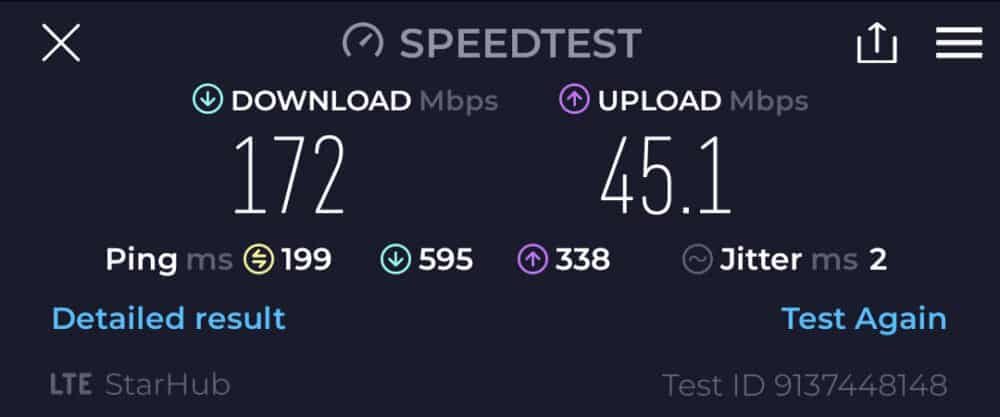
Speeds with aloSIM have generally been faster than any of the competition when I’ve done like-for-like testing in various countries. Coverage, too, has mostly been very good: they tend to partner with at least one of the major networks in each country, if not more.
Using the Telstra network in Australia, speeds didn’t seem to be throttled, certainly not in any meaningful way at least. At well over 150Mbps downloads, my biggest concern was burning through my data too quickly!
Summary
| Company | aloSIM |
| Countries | 200+ |
| Regional Packages? | Y |
| Global Packages? | N |
| Voice/SMS Service? | Y (virtual US/Canadian number) |
| Best For | Low prices, fast speeds, good support |
| Downsides | No global data pack |
| Discount | Use the code TMA for 5% off your first purchase |
Airalo

Airalo has been around for a few years now, and offers eSIM service in pretty much every country in the world at this point. Prices are around the same as aloSIM and in some places, quite a bit cheaper than what you’d pay for a local SIM.
As with all providers, though, there are always exceptions. The price in a few countries, especially those that don’t see a lot of tourism, can be a lot more expensive than local rates. It’s worth doing a bit of research beforehand if you think that might apply to your destination.
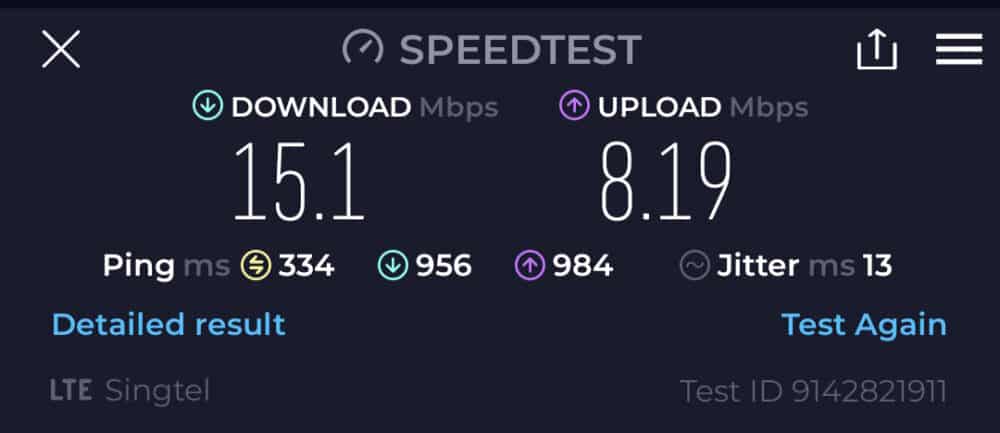
I’ve used the company’s eSIMs in many different countries, from Cambodia to New Zealand, and have found it simple to buy and activate service, and reliable in daily use. LTE speeds have been reasonable if not outstanding, which isn’t unusual for resellers like this.
In most parts of the world, you’ve got plenty of options when it comes to how much data you want and how long you want service for. Only in town for a few days? Grab a gigabye of data for five bucks. Exploring the country for a few weeks? Pick up a monthly pack with a big bucket of data instead.
Service in most countries is data-only, but not in all. If you do need a local phone number for calls and texts, it’s available for a few destinations. You’ll need to click through to the country page and check the individual packages on offer, however; there’s no master list that I’ve found.
As well as individual countries, Airalo also offers eSIMs that work across regions, along with a global version. If you’re on a round-the-world trip, skipping quickly through several countries in one part of the world, or on a cruise where you spend one or two nights in different ports, these could make a lot of sense.
The company has an app that you can use to buy and activate eSIMs and check remaining validity, but there’s no particular need to install it if you don’t want to. The website works well, and you can install new eSIMs from a QR code with a couple of taps.
If you’re looking for more detail, I’ve also written up a complete review of my experience with Airalo. In brief, however, I’ve been happy with Airalo’s pricing and convenience wherever I’ve used it, which is well over 20 countries at this point.
On the Optus network in Australia, speeds were acceptable, if slower than other eSIM providers that use the same network. Whether there’s a business or technical reason for that, or whether it was just due to normal variances in network speeds, it’s hard to say. Either way, I didn’t notice a big difference in regular use.
Airalo runs regular promotions, which helps make their inexpensive pricing even cheaper. Save up to 15% with codes ADAPT15 & ADAPT10.
Summary
| Company | Airalo |
| Countries | 200+ |
| Regional Packages? | Y |
| Global Packages? | Y |
| Voice/SMS Service? | Partial |
| Best For | Worldwide coverage, range of options, low prices |
| Downsides | Slower speeds in my testing |
| Discount | Save up to 15% with codes ADAPT15 & ADAPT10 |
SimOptions

SimOptions has been around a long time: I’ve been recommending them for physical Europe-wide SIMs for several years. More recently, they’ve seen the writing on the wall and gotten into the eSIM game as well, with the same sets of plans and options available.
While SimOptions has individual countries listed on its site like everyone else, when you buy an eSIM from them, you’re often buying regional service as well.
For quite a while that meant that they were a lot more expensive than other providers, but they’ve revamped their prices and offerings recently, making many of their single-country eSIMs very competitive indeed.
They’re still not the cheapest everywhere, but at least at time of writing, they had the lowest prices in many popular tourist destinations. The same goes for their regional packs: if that’s something you’re after, they’re definitely worth looking at.
The other benefit worth pointing out is that SimOption’s packages are somewhat more likely to include a phone number. That’s rarely the case for the cheaper options, but but many of the more-expensive offerings do include a real number that you can give out to other people and use for calls and/or texts as needed.
Buying your eSIM is pretty straightforward, and even with more packages available than usual for some parts of the world, it doesn’t take long to decide what to go for. It’s not the most beautiful website in the world, but it’s functional and does the job well enough.
Installation is handled slightly different to most other providers: you receive an email with the QR code and manual install details rather than being taken to a web page with that information. I don’t mind that approach: it can make it easier to install your new eSIM when you land somewhere new if you didn’t do it before you left home.
I expect this is due at least in part to SimOptions not having a dedicated app for managing and topping up your eSIMs or buying a new one. I received a text with a USSD code to use instead: it’s a pretty old-school approach, but it did tell me how much data I’d used and when the eSIM expired.
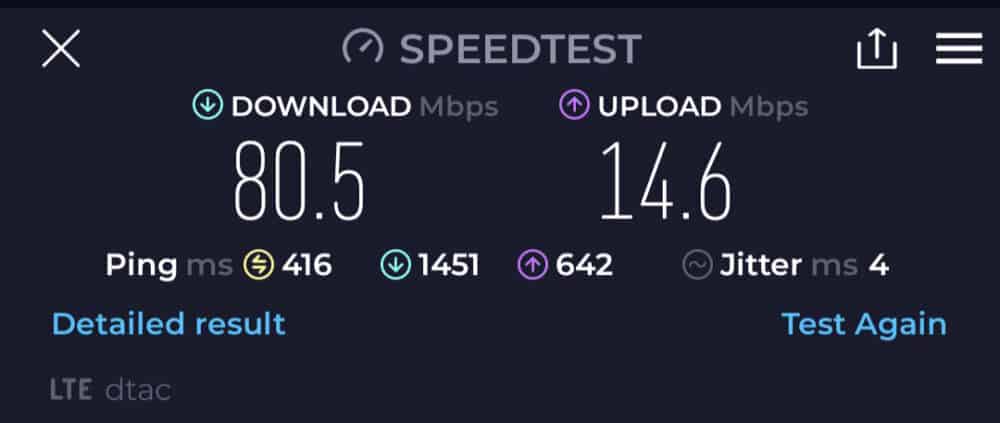
Using the Telstra network in Australia, speeds were good: faster than most of the providers that use the Optus or Vodafone networks, but slower than some of the others that also use Telstra.
As I say elsewhere, though, all of the providers were fast enough to do anything you’re likely to care about as a traveler. This was definitely no exception.
Summary
| Company | SimOptions |
| Countries | 200+ |
| Regional Packages? | Y |
| Global Packages? | Y |
| Voice/SMS Service? | Partial |
| Best For | Regional coverage, phone number availability, good prices |
| Downsides | No mobile app |
Ubigi

I was torn whether to include Ubigi in my research or not. On the one hand, service is available in almost every country in the world, large amounts of data are available in some places, and it offers the cheapest prices I’ve found for certain countries.
On the other, data is expensive and/or limited in several other countries, prepaid global packages are terrible value, and there’s no option for voice or SMS service at all. In the end I decided to check it out, with the expectation that it probably wouldn’t suit every traveler.
The company offers service in 200+ countries and territories, or in other words, almost anywhere you’re likely to find yourself as a traveler. That number doesn’t tell the full story, though: in places like Australia and Brazil, you’ve got one small, expensive local data package available, plus maybe one or two regional or global options.
In other places, the story is completely different. Head to Italy or the United States, for instance, and not only do you have a wider range of local packages, the pricing is much better. The 10GB/30 day data pack for Italy was cheaper with Ubigi than anywhere else I checked, and you can buy up to 50GB at a reasonable price if you need it.
Some of the regional packs offer pretty good value as well: the company’s catchily-named EU27+UK+SWISS option, for instance, provides 10GB of data for a month across all 31 countries for $19. That’s really pretty good.
If you travel regularly, but not necessarily for long periods at a time, there’s also a package that’s valid for a year and gives you 2GB of data per month. At $58, I’d probably be inclined to just buy service when I needed it instead, but if you don’t want to have to think about it each time, you could do worse.
Ubigi is the only company on this list that offers monthly subscriptions as well as one-off prepaid service. It’s mainly for customers looking for ongoing regional or global service: for the latter, $68/month gives you 5GB of data to use around the world.
It’s a reasonable way of ensuring you’ll be connected and have a useful amount of data available wherever you go, but it’s more expensive than the competition, and there’s a minimum three month period before you can cancel. That’s ok for digital nomads and other long-term global wanderers, but not for those on shorter trips.
It’s certainly a lot better than the company’s other global eSIMs, however. If you want a prepaid option, you can either pay $9 for 500MB valid for a day or $25 for the same amount of data valid for a month. That’s laughably poor value: if you want global service for a few days or weeks, there are far better options mentioned elsewhere in this article.
As I mentioned up top, Ubigi doesn’t provide phone numbers with any of its eSIMs: it’s purely data-only. If you want those, you’ll also need to look elsewhere.
When I first put this comparison together, I had major problems actually buying and activating a Ubigi eSIM, and even bigger problems getting anything in the way of useful support about it.
Thankfully the company has redesigned the process to make it simpler, and it now works better, albeit still not without a few quirks. The installation instructions and support pages definitely still need some work.
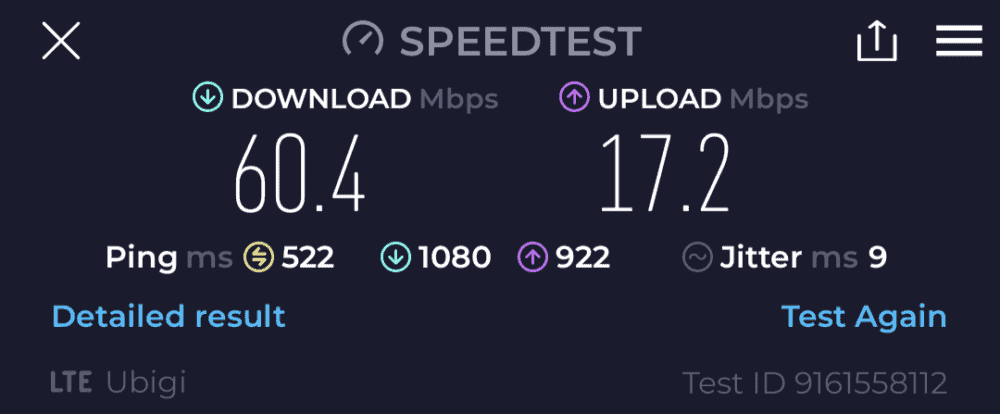
On the upside, unlike the company’s customer service responses, data speeds in Australia were reasonably fast.
Even so, Ubigi’s eSIMs aren’t something I’d recommend to everyone. I still have concerns about the customer service experience, even after giving them a second chance on a multi-country trip late last year, and while data is inexpensive in some countries, it’s not great value at all in others.
By all means check out the prices for wherever you’re going; just be sure to look at the alternatives as well.
Summary
| Company | Ubigi |
| Countries | 200+ |
| Regional Packages? | Y |
| Global Packages? | Y |
| Voice/SMS Service? | None |
| Best For | Cheap in some countries and regions, worldwide coverage |
| Downsides | Expensive and/or small data packs elsewhere, very limited prepaid global packages, poor support and documentation |
Nomad

Nomad is a recent addition to the travel eSIM mix, first firing up its website in 2022. The site and app have a fun, modern design, and like most of the new entrants to this market, they make it quick and easy to find, buy, and manage your eSIM package.
At time of writing Nomad offers service in 200+ countries and areas, including a few regional and global packages. Pricing is generally pretty good, although it varies quite a bit: in some countries it was the cheapest option available, while in others it definitely wasn’t.
Where Nomad stands out, and the main reason I included it in this article, is its range of options for heavier data users and longer-term travel. With other companies, most eSIM plans top out at 5 or 10GB for a month. In many countries, however, Nomad offers packages of up to 100GB for 60 days.
If you’re going to be staying in a country for an extended period, or you know your Wi-Fi access will be spotty and want to have the option of using your phone as a hotspot instead, packages like these are pretty appealing.
Until recently, I wasn’t all that impressed with Nomad’s global eSIM packages, at least for longer-term travelers: they all had a 30 day expiry, which was much less than the competition.
That’s changed recently, at least to some extent: there’s now a “Global-EX” option with quite reasonably priced data bundles for either 180 or 365 days. Just make sure that the countries you’re going to are covered, since even the pricier version only covers 82 countries.
Installing the eSIM is painless: you’ve got the option of scanning a QR code or doing it manually. If you’ve got access to another device (computer, tablet, someone else’s phone, whatever), the QR code is easiest. It arrives in your email, or you can scan it directly from the website after purchase.
If not, you can find manual instructions in the app or in your account on the website, including the code you’ll need to enter. That’s also where you’ll see your remaining validity period and data allowance after activation.
A few of the eSIMs that Nomad sells have a phone number and voice service included, but that’s very much a rarity. SMS is handled in an unusual way: you need to buy a separate eSIM with (at this point) a local number for the US, UK, or Canada, and use the Nomad SMS app to send and receive texts.
Although the recipient doesn’t need to do anything different, I suspect it’s still more hassle than most people can be bothered with. Still, if you desperately need a way of sending and receiving SMS, it is at least an option.
One thing worth noting: using Nomad eSIM is a two-step process. Unlike some of its competitors, your eSIM won’t activate automatically when you enable it on your phone or land in a supported country. Instead, you need to hit the activation link manually in the app or on the website.
In some ways, that’s a good thing: you have control over when the validity period starts, and can’t accidentally start the clock ahead of time. On the other hand, it’s an additional step, and at least with some of the eSIMs that Nomad sells, you’ll need an internet connection (e.g. Wi-Fi) to perform the activation.
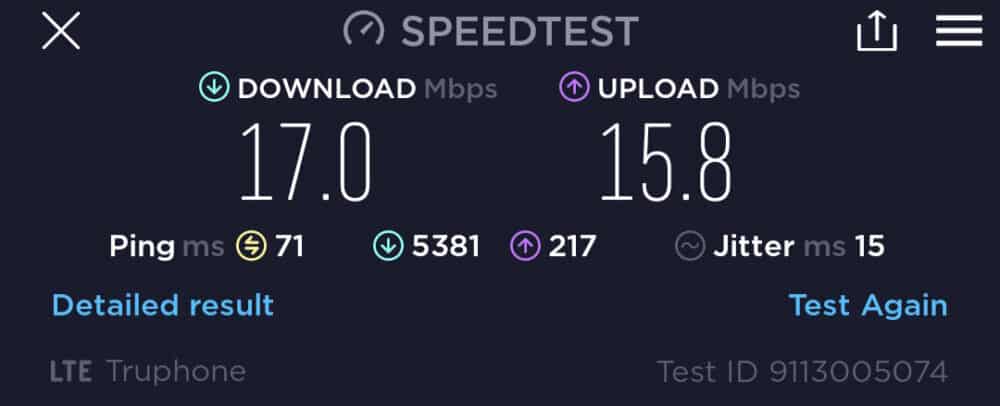
Using the Vodafone network in Australia, LTE speeds were fine, and similar to those from providers on the Optus network. As I’ve mentioned above, you’ll often get slower speeds with resellers than what you’d get buying a SIM direct from the carrier, but rarely does it make much of a difference in the real world.
Summary
| Company | Nomad |
| Countries | 200+ |
| Regional Packages? | Y |
| Global Packages? | Y |
| Voice/SMS Service? | Partial voice, limited separate SMS service available |
| Best For | Low prices in some countries, range of options, large data packs |
| Downsides | Requires separate activation before use |
Yesim

YeSIM is an unusual proposition. Based in Switzerland, its pricing tends to be slightly higher than the competition in most countries, though there’s not always a lot in it.
Many of its 30-day plans include a minimum of 10GB of data: that pushes the base price up, but means you shouldn’t need to worry about how much data you use. There are usually smaller plans available if you only need them for 15 days or less.
There are also unlimited data packages in most countries: you’ll pay a bit for them, but if you know you’re going to need a lot of data, it provides an option that most others don’t.
Where things get more interesting, and where I’d be likely to consider Yesim over most of the competition, is the company’s global packages. You’ve got two options here, both of which can be a good choice for longer-term or frequent travel.
The Pay As You Go (PAYG) version offers a simple approach where you load your account with credit and use it as you travel, without any need to buy a specific package.
Credit can be topped up in any amount and lasts for a year, which makes it a good option for infrequent international travelers. The per-megabyte rates are different in each country: sometimes they’re reasonable value, sometimes they definitely aren’t.
Where I see the value here, then, is in two different scenarios. First, if you’re only in a country for a short time (on a cruise or tour, for instance) and don’t need to use your phone a lot, you’ll probably still save money over buying a chunk of data and then not using most of it.
On the other end of the scale, if you’re in a country for several weeks and/or expect you’ll use a lot of data during that time, a local SIM card is typically better value than a travel eSIM. In that case, you’d use Yesim’s PAYG option when you first arrive, to tide you over until you can pick up a local SIM in town.
I’ve used PAYG travel SIMs in this way in the past, and it avoided a lot of hassle at the airport, since I no longer needed to line up with everyone else to buy an overpriced tourist SIM card.
The other global option is a standard “x data for x days” approach. It can be quite a bit cheaper than the competition, so if you’re planning to visit several countries over the course of a few months, it’d definitely be worth a look.
Yesim currently offers service in 170 countries and territories, which is on the lower end for a global provider. Most popular travel destinations are covered, but you’ll want to double-check if you’re heading somewhere a little more obscure.
Installing the eSIM was easy: after choosing the package and paying for it, I was given a QR code to scan. The confirmation page warned that it could take up to ten minutes to start working after activation, however, and indeed it did. I also needed to restart my phone before the little LTE icon made its appearance, so it’s not the smoothest process.
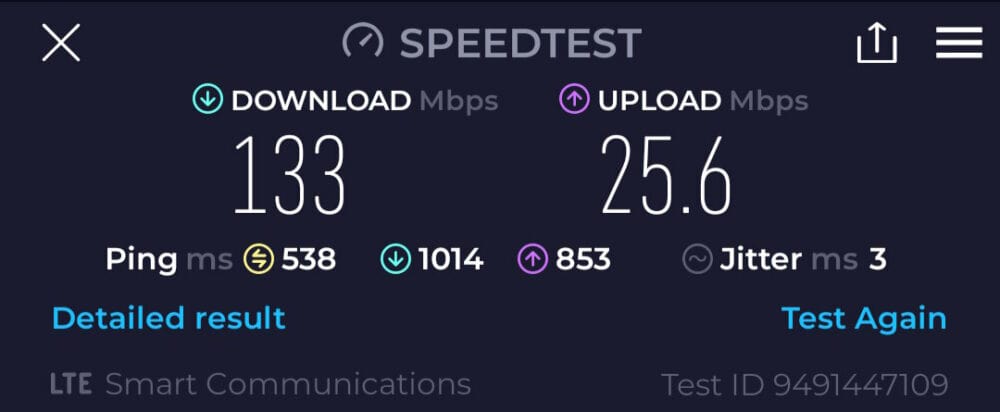
Using the Telstra network in Australia, speeds were impressively high. One aspect I did like about Yesim’s offerings was that it clearly tells you upfront which networks it uses in each country, so you can cross-reference that you’ll have service if you’re heading somewhere remote.
Yesim also offers a virtual number service, although it’s pretty limited. If you need a local number to receive SMS texts in a handful of countries, you can get one for as long as you need it. You can’t make or receive calls with it, however, and as best I can tell, it only works with a few online services like WhatsApp.
Like some of the other providers mentioned above, Yesim operates a loyalty and referral program. Send a customer their way, and you’ll get the equivalent of two euros worth of credit to buy data packs or virtual numbers with.
Overall Yesim’s offering isn’t something I’d recommend for everyone, but it will be useful for some travelers, especially if a long-expiry, pay-as-you-go service suits the way you travel internationally.
You’ll get 3 Euros off your first purchase if you use the promo code Adapter at checkout.
Summary
| Company | Yesim |
| Countries | 170+ |
| Regional Packages? | Y |
| Global Packages? | Y (Pay As You Go and bundles) |
| Voice/SMS Service? | Limited separate SMS service available |
| Best For | Unlimited data packs available in most countries, long-expiry global PAYG option |
| Downsides | Somewhat limited coverage area, not especially good value in most countries |
| Discount | Use the code Adapter for €3 off your first purchase |
easySim

If the bright orange in the easySim logo looks familiar, that’s because it’s part of the same group as well-known budget airline Easyjet (and many other companies). Given how many people they take overseas each year, it’s no surprise they got into the travel eSIM game as well.
Pricing is pretty competitive: they’re one of the cheaper options for much of Europe, especially if you’re roaming across the continent, and usually not much more than the lowest-cost provider in most of the rest of the world as well.
Data packs for most countries start at 1GB for a week and top out at 20GB for 30 days. There are a few companies offering larger packs than that, or versions with unlimited data, but easySim’s range covers most traveler’s requirements.
Other than the low prices in Europe, the biggest reason to use easySIM is their refreshing approach to roaming. Most companies charge a lot more for regional data packs than single-country ones, but not so with easySIM.
Even with the largest packs, you’ll usually only pay a few dollars more to have service in (for example) much of Europe or Asia than you will for one country in that region. If you’re traveling through several different countries, it’s a real money and time saver.
On the downside, I’d call the site design functional rather than beautiful, and there’s no mobile app for buying new packs or checking how much data you have left. You can do those things using the website on both mobile and desktop, of course: it’s just a bit clunky and the features are somewhat limited.
Even so, buying and installing the eSIM was pretty straightforward. I chose the country and data pack I wanted, paid for it, then waited for an email to arrive with a QR code.
The confirmation screen said it could take up to 15 minutes, which feels like too long if you’re at an airport waiting to get connected, but in the end it was in my inbox inside two minutes. From there, the installation process was seamless: scan the code, enable the new eSIM, turn on roaming, and away I went.
Unlike some of the other providers, easySIM only ever installs one eSIM on your phone: you can leave it installed between trips and buy a new data pack when you need it. Most of the others need you to install a new eSIM each time, so this approach saves a bit of effort if you’re a regular traveler.
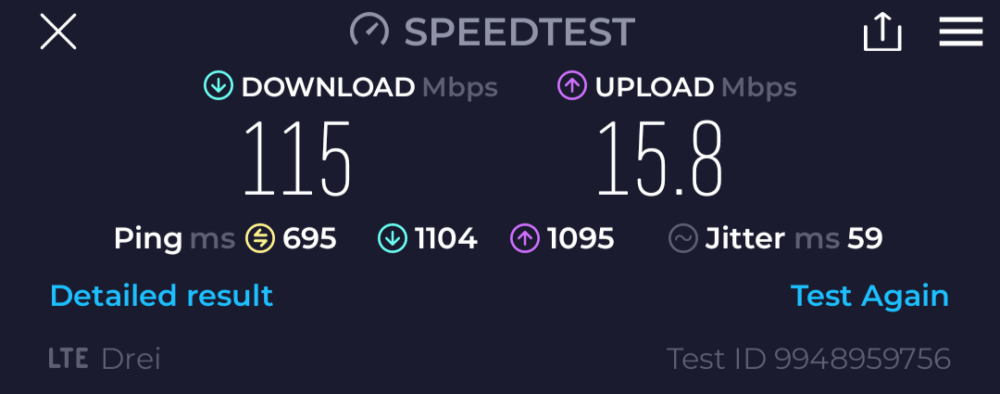
Speeds in Australia were impressive: using the Telstra LTE network, I saw 100Mbps+ downloads wherever I tested it. It’s easy to see on the website which providers and type of service are supported: most countries have multiple providers listed, many of them with 5G if your phone supports it.
Summary
| Company | easySim |
| Countries | 145+ |
| Regional Packages? | Y |
| Global Packages? | Y |
| Voice/SMS Service? | No |
| Best For | Low prices in European countries, excellent roaming options |
| Downsides | No mobile app, basic website |
Instabridge

Right out of the gate, Instabridge offers something I haven’t seen from other providers: a charitable benefit when you purchase from them.
For every gigabyte of mobile data purchased from the company, they give away another gigabyte to someone in a developing country. They don’t give specifics of how this happens, but assuming it’s true (and I have no reason to doubt it), it’s something that very much sets them apart.
Headquartered in Sweden, they offer service in 180+ countries and territories. Pricing is very competitive: in most of the places I checked, Instabridge’s per-gigabyte cost is one of the lowest I’ve found.
There are a few outliers, as is often the case: 20GB of data valid for a week in Afghanistan, for instance, will set you back a whopping $324. For anywhere that most people are likely to visit, however, Instabridge is one of the most affordable options.
There’s not as much flexibility with data plans as some of the other companies, with typically four options available: 1GB for a week, 3GB for 15 days, 10GB for a month, or 20GB for a week. That’ll still cover most needs, but perhaps not all, and there are no unlimited packs available.
As well as the low-cost options for individual countries, Instabridge offers a handful of regional packs (Asia, Europe, and Latin America) and a global version. The Asia and Europe packs are particularly good value.
You can browse and purchase packs on the site, which is clean and easy to use, but installation of the eSIM is handled through the app. I don’t love having to install an app just to use an eSIM, but on the upside, it does make the process extremely straightforward.
The entire experience, from buying the pack, downloading the app, and installing the eSIM, took well under five minutes. Unlike some of the other providers, you’ll use the same eSIM for any data package you buy in the future, so don’t delete it when your current one expires unless you don’t plan to use Instabridge again.
Download speeds in inner Melbourne were very good, easily exceeding 100Mbps+ downloads on the Vodafone network wherever I tested it. That’s not the best network in the country, but it’s fine in the towns and cities.
All in all, this is a very affordable way of getting data service in almost every country in the world, with a side of social good thrown in to sweeten the deal.

Summary
| Company | Instabridge |
| Countries | 180+ |
| Regional Packages? | Y |
| Global Packages? | Y |
| Voice/SMS Service? | No |
| Best For | Low prices in most of the world |
| Downsides | Doesn’t always use the best networks in a country |
Roamless

Unlike the other companies on this list, Roamless offers both fixed-term plans and pay-as-you-go (PAYG) credit. The former are usually cheaper, while the latter lets you simply top up your account and then use it anywhere.
The PAYG option makes for a very efficient way of using your data with zero wastage, and as long as you’ve got enough credit in your account, you’ll have coverage everywhere they support (186 countries and territories).
I’ll talk mostly about that option in the rest of this review, since it’s something that really helps Roamless stand out from the crowd.
Rather than guessing how long you’ll be in a country and how much data you might use while you’re there, you just switch your phone on and use as much as you need. When you move to the next country, you keep using the same eSIM and credit, at whatever rate per gigabyte applies there.
I’ve used a few other PAYG services like this in the past, both physical and eSIM-based, and the flexibility has always come at a significant cost: the per-GB rate has been a lot higher than what other companies were charging.
While that’s also an issue in some of the destinations that Roamless covers (Mongolia, I’m looking at you), it’s definitely not the case everywhere. In much of Europe, North America, and Oceania, along with several countries in Asia, the costs are among the lowest on this list for moderate amounts of data.
That becomes less true if you use a lot of data: you’ll find large fixed-length data packs from both Roamless and other companies that cost a lot less per gigabyte, and if you want unlimited data, then PAYG like this clearly isn’t the right option.
For people like me who generally visit several countries each year and don’t have such heavy data requirements, though, Roamless is pretty compelling in much of the world. The credit on your account doesn’t expire, so as long as you don’t delete your eSIM, you’ll be able to use it whenever you like.
The setup process was straightforward. Roamless pushes you harder than most to install their app, but at least it’s easier to use than some of the others.
Once you’ve created an account and downloaded the app (or vice versa), you install the eSIM from within the app. That avoids the need to scan QR codes or copy and paste activation codes, saving a small amount of time.
You can mix and match between your PAYG credit balance and a fixed-length plan: if your plan expires or runs out of data, you’ll start using the PAYG balance instead.
Speaking of your PAYG balance, you can also use it to make calls to international numbers from within the app. This is something offered by none of the other eSIM companies, and is hugely useful if you need to call a taxi, hotel, or tour guide in a foreign country.
I talked more about the international calling side of things in this article, but for now, I’ll just say that even if you think you’ll only use it occasionally, it’s a real benefit.
Search or scroll through the list of countries to see how much you’ll pay per GB of data: with PAYG, you’ll get the lowest rates in places like the UK, EU, USA, and Australia (currently $2.45 USD) and the highest in countries like Tonga, Guyana, and the Central African Republic ($19.95).
That wide range means that you won’t want to use Roamless everywhere you go, but in many of the more heavily-touristed parts of the world, it’s one of the cheapest options you’ll find. Combine that with only paying for what you use, and you can see the appeal.
Downloads on the Optus network in Australia were extremely quick, easily the fastest I’ve seen from anyone other than Optus themselves. Uploads, however, were slow: that’s common for any Optus reseller, including the one I use myself when I’m at home.

Summary
| Company | Roamless |
| Countries | 186 |
| Regional Packages? | Y (PAYG) |
| Global Packages? | Y (PAYG) |
| Voice/SMS Service? | Yes |
| Best For | Low prices in several regions, pay-as-you-go global coverage with no credit or data expiry, making phone calls |
| Downsides | No discounted rates for large amounts of data |
SimLocal

The first time I came across SimLocal was, oddly enough, at the bus terminal at Heathrow Airport. The company has vending machines with SIM cards at a handful of European airports, and I didn’t even know they sold eSIMs until at least a year later.
They take a different approach to the other companies on this list, probably due to those existing relationships with mobile providers. Alongside white-labelling cell service and selling it under their own brand like everyone else does, SimLocal also sells eSIMs from the mobile companies themselves.
In most cases, you’d think “why don’t I just cut out the middleman and go straight to the source”, but this is one of those rare situations where it’s often better not to.
Some of the providers don’t sell prepaid eSIMs, or at least not online to international visitors, while others have non-existent support. Sim Local is based in Ireland and customer service was responsive and helpful when I contacted them.
Their pricing is competitive: they were the cheapest for South Africa when I checked, and one of the lower-cost options almost everywhere else. They’ve also got some good regional packages and a very inexpensive global one, although it only works in 70-odd countries: that’s a lot fewer than the higher-priced competition.
SimLocal tends to have more options for large or unlimited amounts of data than most other companies, so if that sounds like something you need, be sure to check them out.
That partnership with mobile providers also means there are more eSIM packages than usual that come with a phone number. Pay attention to the detail, though: the number isn’t always local to the country you’re in, which isn’t as useful if you want people in that country to call you.
Setting up the eSIM was much the same as any other: choose and pay for a package on the website, scan the QR code or enter the activation details from the email, and you’re good to go.
LTE speeds in inner Melbourne were a bit unusual. Download speeds on the Telstra network were fast, around 90-100Mbps whenever I tested them. Uploads, though, were slower than other travel eSIMs on the same network: I didn’t see them hit double figures at any point.
In the real world, that means you’ll have no problems watching videos or using any of your usual travel apps, but the person on the other end of a video call might notice the difference.
That said, SimLocal can use any of the major networks in Australia, so it’s possible that manually switching to a different carrier may well have changed the speeds I saw.

Summary
| Company | SimLocal |
| Countries | 200+ |
| Regional Packages? | Y |
| Global Packages? | Y |
| Voice/SMS Service? | Yes |
| Best For | Low prices in some countries, unlimited data packs, getting a phone number with your eSIM |
| Downsides | Uploads not as fast as some of the competition |
Get regular updates from the world of travel tech and remote work
News, reviews, recommendations and more, from here and around the web
Recommendations
While there’s little doubt that international travelers benefit from using eSIMs for both price and convenience, picking the best option still requires a bit of work.
Fortunately that has more to do with tracking down the best price and reliability than anything else: as long as your phone is compatible, purchase and installation tends to be straightforward.
Weighing up everything from the price and range of eSIM packages available to how easy they are to manage, how well the website and apps work, and suitability for a wide range of trip lengths and styles, my first pick for visiting most individual countries right now is aloSIM.
While no international eSIM provider that I’ve come across has comparable prices to local SIMs everywhere in the world, aloSIM consistently gets pretty close in most of the places that tourists regularly visit.
For short trips of a week or less, it’s usually been cheaper to buy a pack from them than whatever’s on offer at the airport kiosk, helped by the regular specials. Use code TMA for $3 off your first purchase.
I’ve done a bunch of like-for-like testing with aloSIM and other providers in something like 20 countries so far, and on average, I’ve found them to have the fastest speeds. Not everywhere, of course, but most places, most of the time.
They’re the company I always start my research with whenever I’m about to head somewhere new: if the price is comparable, I’ll buy from them. Simple as that.
That said, they get stiff competition on pricing from Instabridge, and I suspect I’ll be using them more often on my travels in the future. In many of the places I visit, they have noticeably cheaper prices for larger data packs with long durations (10GB/30 day) than anybody else.
They don’t always use the best networks in a given country, but that’s at least somewhat true for most of the other providers as well.
As it stands, I’ll probably choose them when I know I’ll be almost entirely in large towns and cities, where coverage is likely to be decent no matter which carrier is being used. Use the code TOOMANY20 to get 20% off your first purchase.
If you like the idea of not wasting a single byte of data, take a close look at Roamless,
It’s not the right answer everywhere, but the combination of low per-GB prices in many popular countries, the option of low-cost international calls, and a no-expiry pay-as-you-go model that means you only pay for the data you use is compelling for many travelers.
If you’re visiting many different countries over the course of your trip, and especially if you take a few short international trips each year and don’t use huge amounts of data, this could well be the cheapest and easiest option you’ll find. Sweeten the deal with code TMA20 for 20% off your first purchase or top-up.
Airalo has similar pricing to aloSIM, sometimes a bit more, sometimes a bit less, and often exactly the same for a given amount of data. It also offers service in 200+ countries and territories, albeit with generally slower speeds.
Save up to 15% with codes ADAPT15 & ADAPT10: depending on where you’re going and the size of the data pack you’re buying, that’s sometimes enough to make it the cheapest option on the day.
It’s also the best option if you’re off on long-term trip: Airalo’s global eSIM covers around 140 countries and gives you up to 20GB of data that’s valid for up to a year, at a good price. I wrote up a review of it here, after a friend and I used it in 50+ countries over the course of a year.
If you need lots of data (let’s say 20GB or more), you’ll want to take a look at what Nomad has to offer. Like-for-like pricing varies widely (sometimes cheaper than the competition, sometimes significantly more expensive), but while most other companies tend to top out at about 10GB/month, Nomad offers up to five times that in some places.
Speaking of large data packs, check out SimLocal for those as well. It typically has more unlimited or very large bundle options than most other companies, many of which also come with a phone number.
Prices are generally pretty competitive, and in some countries it’s the cheapest option of the lot. Regional packs also tend to be good value: there’s a particularly cheap global bundle, although it doesn’t cover as many countries as with other companies.
SimOptions has revamped its pricing and offerings in recent months, adding low-cost single-country eSIMs to its existing range of mostly region-focused packs at higher prices.
As a result, it’s now a compelling option in much of the world, both when visiting an individual country, and at times, when you’re bouncing around between different parts of Europe or Asia.
You’re somewhat more likely (although still far from guaranteed) to be able to get a phone number with SimOptions if you need it, especially with the more-expensive regional package options in Europe.
For travel in Europe, easySim is a great choice. Not only does it have inexpensive data packs for most European countries, there’s minimal extra cost to use that data across much of the continent.
The same low-cost roaming approach applies to other countries and regions as well, so if that’s the kind of trip you’re taking, make sure you check out their current prices, and how much it costs to add a roaming option.
Yesim has a useful long-expiry global option that lets you just pay for the data you use without having to buy a specific package. It tends to be more expensive, though, both for the global and single-country bundles.
For that reason it wouldn’t generally be my first pick, although do check whether the €3 discount you get after using the code Adapter at checkout tips the balance.
And finally, Ubigi. The eSIM performs reasonably well in most of the countries I’ve used it and, in a few places at least, is quite cheap. Their customer support hasn’t lived up to expectations, however, so I can’t recommend them over the other companies that make more of an effort.
So there you have it, my findings on international travel eSIMS right now. Does it all make sense? Have you used a different company that you were particularly happy (or unhappy) with? Let me know in the comments!
Main image via Vlad Teodor/Shutterstock.com, logos via respective companies, screenshots via author







I’m a big fan of eSims.
Lately I’ve discovered Dent. So far it’s my favorite, with a different approach from the rest. I’ve only tried it on a short trip to the USA so far, and it worked perfectly.
Hey Dave, check out the new offering from Soprani[DOT]ca, the Canadian makers of open-source XMPP-based JMP Chat. You can sign up for their data eSIM or physical SIM (both still in beta, with a waiting list), load some non-expiring credit, and use it throughout the US and Canada (only available there at the moment). But as your credit doesn’t ever expire, you can keep it and use it for repeated trips in the US and Canada. (I think they’ll ship the SIM to non-US/Canada addresses, but please verify.)
Paired with their JMP chat account (which works anywhere you have an internet connection, but only comes with a US or Canada number), you can get cheap phone calls, SMS, and MMS service, too.
Their SIM/eSIM service: jmp[DOT]chat/sim
Main site, XMPP service: jmp[DOT]chat
KeepGo has some excellent coverage and rates. Their data is good for a year.
Keep Go’s Pisces plan worked well for me for a week in Paris, albeit mostly 4G on Orange network. And the leftover data will still be valid when I return next month!
Also good is that they give a French IP number, so services know I’m in France, and latency is low for VoIP. Many of the other eSIMs have Hong Kong, or other out-of-country IPs.
Thanks for this excellent coverage of eSIMs! I’m in the market for one, so this was timely.
Surprised you didn’t include Holafly. Their 60 day Europe “unlimited data” deal (AUD127) seems good (you can get a 10% discount if you go via their chat, thanks Manuela) and you get an Austrian telephone number. It includes the UK too and the claimed providers are good. I’ll let you know how I go when I get back in October!
Thanks Tony. I have a list of other eSIM companies to test and write up when I get a spare few days (I’ve been traveling for the last couple of months without a lot of laptop time!) – Holafly is one of them. 🙂
I am a fan of Ubigi because you just have to install it once and you can always buy data on it, even if you are in another country already and don’t have an internet bundel as the eSim you install allows for a free connection to their service.
With other services I had to install a different eSim per package or even per purchase, and maintaining those on the phone after expiration. Also some others require to already have an internet connection to be able to activate the package first, which is annoying when arriving at a place to discover their wifi is broken when counting on it being available.
Also, sometimes the packages from my default sim from home can be interesting as well. My provider offers monthly packages when you go somewhere, valid for 31 days. So it is always worthwhile to check-out your own providers offering before jumping through loops.
I’ve used Airalo eSIMs successfully twice (a six-month global and a single-country one), but the seven-day one I bought for Isle of Man never did work when I was there last month, despite much troubleshooting with Airalo Support. They refunded the money.
Thank you for this comparison between players, particularly the posted SpeedTest results. In general I’ve found the down/up speeds to vary with signal strength, time of day, etc, as you’d expect, but the ping results are generally abysmal for eSIM products – most of the results you posted are 300 – 700ms, although Nomad is an exception (in Australia at least). A local sim will usually be less than 50ms.
The reason for this is ALL the data these eSIMs provide is routed through an overseas server, usually in Hong Kong, Singapore, Poland, etc, and then back again to whatever country you’re in. That makes realtime communication – like WhatsApp voice, and wifi-calling very laggy and frustrating, more so if video is involved like Zoom or Facetime.
Web surfing is also slowed down by these pings as most webpages take 3-5+ back and forths – likely an extra 2 or 3 seconds – before the content is shown. It’d probably be OK for streaming movies, or down/uploading large files.
It’s often tricky to find out where this overseas server is prior to purchase, although a few sellers try and dress it up as a free VPN-type security IP mask. I imagine your Nomad test above was using a Singapore based server, hence the reasonably fast ping.
Some of the global packages offer multiple servers – maybe one on each continent, but never one in each country.
My approach is to use the YesSIM payg product you recommend for airport to hotel data needs, and unless I’m just staying overnight or so, buying a local SIM/eSIM from a local carrier. It’ll have to be very inconvenient to get a local SIM/eSIM before I’d consider buying 10GB/30days travel eSIM with those pings!
Yep, I agree that (depending to some extent on what country you’re in vs where the eSIM provider routes through) ping times will be worse with travel eSIMs than local SIMs.
How much that matters will depend quite a bit on how you use your phone while traveling. I’m halfway through a three month trip at the moment, typically using various travel eSIMs for shorter stays in a country and switching to local SIMs the rest of the time, and I can honestly say I haven’t noticed the difference even when my local SIM package expired in the UK and I bought a travel eSIM to tide me over for the last few days.
That said, I don’t usually buy large data bundles, which means I don’t usually make video calls or watch much in the way of streaming video over cellular data anyway. I just wait until I’m on WiFi for that.
If your usage is different to mine, you’ll probably notice it more!