
The 4 Best Earbuds for Sleeping

From noisy neighbors and snoring partners to rumbling traffic and all-night parties, the list of things that can stand between you and a good night’s sleep seems almost endless. Especially when you’re lying awake at 3am listening to them.
I suffered from insomnia for years, falling asleep only to wake up an hour later to the slightest noise. A passing car or distant conversation would jolt me awake, and I’d stay that way for the rest of the night. Things have got much better in that regard, but I’m still a light sleeper even now.
As a result, when it comes keeping sound out of my ears while sleeping, I’ve tried pretty much every approach there is. Foam, silicone, and other types of earplugs, earbuds of all kinds, white noise machines, even several pillows pulled forlornly over my head in one particularly loud, miserable hotel.
None have been perfect, but I’ve found certain makes and model of earbuds better than the alternatives. I’m using “earbuds” in a generic sense here, to cover traditional in-ear buds, flat over-ear versions, and anything similar that pushes sounds or silence into your ear canals while you’re desperately trying to get some rest.
What I’m not including in that definition, however, is traditional headphones. I’ve tried sleeping while wearing several different models over the years, and because I lie on my front with one ear on the pillow, none were small enough or comfortable enough for anything beyond a quick nap.
If you’re also a front or side sleeper, or just move around during the night, earbuds or thin earphones are the way to go. After years of trial and error, these are the best ones I’ve used.
- Type: Wireless earbuds
- Battery Life: Up to 14 hours
- Connection: Bluetooth
- Noise-Canceling? No

- Type: Wireless earbuds
- Battery Life: Up to 13 hours
- Connection: Bluetooth
- Noise-Canceling? No
- Type: Wireless headband
- Battery Life: Up to 24 hours
- Connection: Bluetooth
- Noise-Canceling? No
- Type: Wireless earbuds
- Battery Life: Up to 6 hours
- Connection: Bluetooth
- Noise-Canceling? Yes
What to Look For
Because it’s such a specialized subject, knowing what to look for in sleep earbuds is surprisingly complicated. Companies have taken a number of different approaches to solving the problem, some of which work much better than others.
From comfort to connectivity, battery life to blocking out noise, there’s something different to think about with earbuds designed for sleep compared to the usual models we wear in everyday life. Based on what feels like a lifetime of experience, I’ve summarized the most important factors below.
Noise Blocking
For most people, the main reason for buying a set of sleep earbuds is, well, because they’re finding sleep hard to come by. Whether it’s a due to a snoring partner, traffic noise, tinnitus, or something else, anything that helps you drift off into a blissful slumber is very welcome.
If you’re trying to reduce outside sound as much as possible, noise-canceling earbuds really are the way to go. There’s always be a tradeoff between size, features, and battery life with this style of bud, but in my experience, they help me sleep better in loud environments than anything else.
Next up: noise isolation. This type of bud functions like traditional earplugs, relying on a physical barrier between your ear canal and the outside world to keep the noise out. They’re not as effective as those with actual noise cancelation, but tend to be cheaper, have better battery life, and (sometimes) be smaller and more comfortable.
Last up is anything that sits on, rather than in, your ears. This includes sleep headbands with speakers inside, flat headphones, or similar. They tend to fit the widest range of head and ear sizes, but block out the least amount of sound, so aren’t ideal for noisy environments.
Comfort
More than most other types of audio gear, comfort is vital when it comes to sleep earbuds, for a couple of different reasons.
First off, they’re likely to be in your ears for eight hours or more, night after night, so even small amounts of rubbing or discomfort become a much bigger issue over time. Waking up in pain in the middle of the night isn’t exactly a recipe for better sleep. Ask me how I know.
Secondly, if you sleep on your front or side (i.e. with your ear pressed into the pillow), the size, shape, and materials of the earbuds makes a huge difference to your comfort level. Hard plastic pressing firmly into your ear canal makes it difficult or impossible to find and maintain a comfortable sleeping position.
Changing to a softer or different style of pillow can help a lot (I talk more about that at the end of this article), but there are still some models of earbud that won’t be comfortable to lie on no matter how soft your pillow is.
For some people, the only solution is to avoid the issue entirely by using a headphone or headband-style model, made from a soft material with thin, flat speakers inside. These tend to be more comfortable to wear, but block out far less noise, so they really only work in quiet rooms.
Fit
A snug fit is important with any earbuds, but especially those that you wear while sleeping. Without it, you’ll likely wake up with the buds at the bottom of the bed, especially if you move around a lot during the night.
It also makes a huge difference to the effectiveness of any noise canceling or isolation on offer: even the best noise-canceling models don’t work well when there are gaps for sound to get in.
To that end, look for one of three options when choosing sleep earbuds: a good range of silicone tips to ensure a snug fit, a headband that fits firmly around your head and ears without being so tight that it’s uncomfortable, or some sort of memory wire that you can adjust to your ear shape and size.
Connection Type
When connecting sleep earbuds to your phone and other devices, you’ve basically got three options: Bluetooth, physical cables, and nothing at all. Each has its pros and cons, depending on your situation and what you like to listen to (if anything) while falling asleep.
You’ll likely be familiar with Bluetooth from the gear you already own. It allows for wireless connections and has widespread compatibility with other devices, with the downside of reduced battery life. Given how small the battery in most sleep earbuds is, this can mean it runs out before the night is up.
Some earbuds take a hybrid approach, letting you choose between the flexibility of Bluetooth streaming or the battery savings of playing ambient sounds from internal storage.
Wired options have the advantage of typically being cheaper, and not needing to worry about battery life. On the downside, there’s a good chance you’ll end up with the cord wrapped around your neck in the morning. Over time, all the pulling on the cable also tends to lead to loose connections.
Audio Quality
Unless you opt for general-purpose earbuds and the limitations they come with for sleeping (like size and battery life), don’t expect great sound from sleep-focused buds. Their petite size necessarily means very small drivers inside, so you won’t get much in the way of rich soundscapes or thumping bass.
For most people, though, that’s unlikely to be a problem. You’re trying to fall and stay asleep, after all, not listen closely to your favorite album. As long as it’s not so bad that it distracts and annoys you, it’s probably good enough for the job it’s trying to do.
Battery Life
I touched on it earlier, but wireless earbuds don’t tend to have amazing battery life. Most of the general-purpose models don’t last long enough to get through the night, and even worse, often announce their low charge level with a loud tone or voice announcement. Not helpful.
That’s why when it comes to sleep-specific versions, you’ll find manufacturers taking inventive approaches to extend battery life to at least eight hours, if not more.
Some limit the maximum volume, for example, while others only let you load a few tracks onto the earbuds rather than streaming from your device. The best ones, though, do manage to eke out a full night’s playback from a set of tiny earbuds.
The alternative, of course, is going with a wired version instead. On the upside, you’ll never wake up in the middle of the night because your earbuds have run out of battery. On the downside, you might wake up struggling to breathe because the cable is trying to choke you in your sleep.
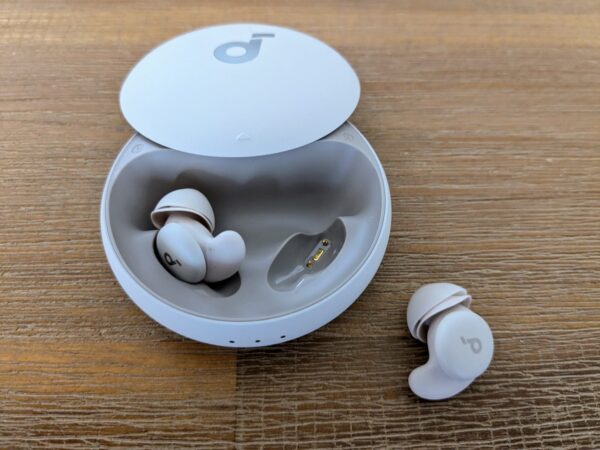
Best for Comfort: Soundcore Sleep A20
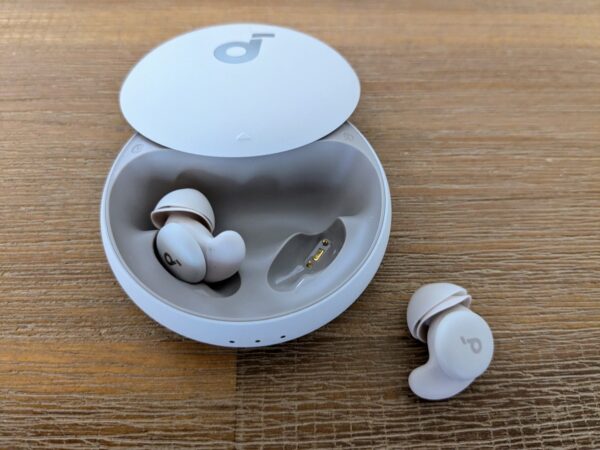
Anker’s Soundcore brand has been quietly churning out good, reasonably-priced audio gear for a long time, but until recently it had steered clear of earbuds designed specifically for sleeping. That changed in recent years, first with the Sleep A10, and now with the updated Sleep A20 model released a few months back.
The A20’s are noise-isolating earbuds, which means they block out sound in the same way as an earplug. The passive isolation works pretty well, at least if you use the right size tips for your ears, but it’s not a replacement for true noise cancelation in loud rooms.
Where the A20’s do excel, however, is comfort. Some of the smallest earbuds I’ve come across, they fit easily inside my average-sized ears. This makes them more comfortable for side sleepers like me: in practice, they’re the only ones where I’ve been able to sleep with my ear pressed into the pillow all night.
They come with a set of seven silicone tips and three wings to help keep them securely in your ears, and the approach seems to work: so far, I’ve never woken up to find they’ve fallen out during the night.
The A20’s are standard Bluetooth earbuds, so you can stream music, audiobooks, or whatever else helps you fall asleep from your phone. There’s also an ambient noise setting that’s enabled via the Soundcore app, with a variety of included tracks and the ability to create your own.

For listening to music and podcasts while you sleep, the A20’s are impressive. I used a pair for several weeks, in a range of environments ranging from “quiet suburban street with noisy birds in the morning” to “loud inner city neighborhood on a Friday night”, and slept soundly the whole time.
Battery life is very good as these things go, lasting around 14 hours while playing ambient sound. Even while streaming audio, you can expect them to last all night: the company suggests you’ll get up to ten hours from them.
I’ve got even longer than that, mainly because I usually only line up two or three hours of podcasts and am asleep long before silence descends. As a result, the buds still have plenty of charge left in the morning.
The audio quality is fit for purpose, but no more than that. Because the earbuds are so small, don’t expect booming bass or crisp treble: podcasts are fine, but musical tracks sound pretty thin. It doesn’t bother me when I’m trying to sleep, but the A20’s likely won’t double as everyday earbuds for most people.
There’s a “find my earbuds” feature in the app in case you dislodge them during the night (I’ve never managed it), as well as a bunch of sleep tracking information that may or may not be accurate.
If I don’t need to block out a nightclub next door and just want to drift off while listening to my favorite podcasts or music, the Sleep A20’s are what I choose to do it with.
You can read my full review of them here.
Pros
Cons
Best Flat Headphones: DubsLabs Bedphones
Some people really just don’t like the feeling of having things inserted in their ears for long periods, or struggle to find earbuds that fit properly and don’t fall out or become uncomfortable.
If that sounds like you, take a look at the DubLabs Bedphones. I’ve been using these for a while, and they succeed as sleep aids in a way that no other over-ear headphones do, at least not in my experience.
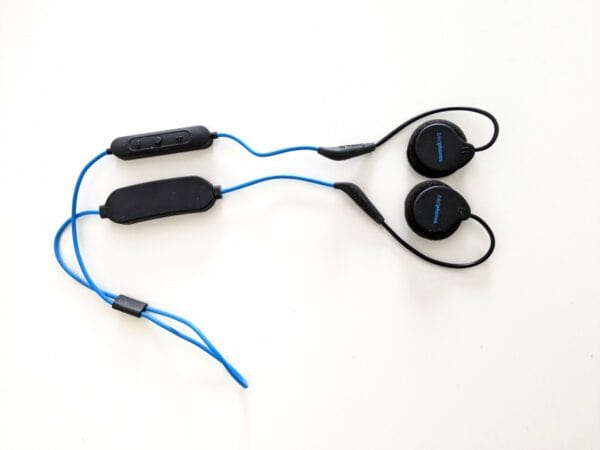
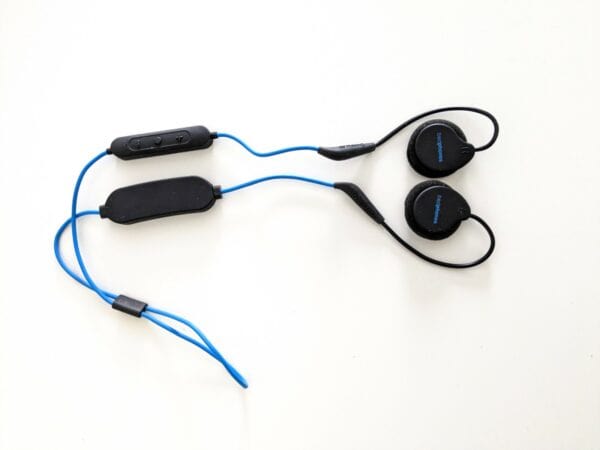
The most obvious part of the Bedphones is the large, flat earpieces. When I say flat, I’m not kidding: they’re only a few millimeters high, and both top and bottom are almost completely horizontal. That’s important for anything worn while sleeping: if any part sticks out, it’ll dig into your ear or catch on the pillow. These ones don’t.
I’ve been genuinely surprised at how comfortable the headphones are to wear while sleeping, and how little the earpieces move around. I don’t toss and turn a lot, but I inevitably move around a bit during the night: the memory wire wrapped around each ear does a strikingly good job of keeping them in place.
Because they sit over top of the ear canal, they fit a pretty diverse range of ear shapes and sizes. My partner has much smaller ears than me, for instance, and after a quick adjustment of the memory wire, she was able to get the earpieces to fit and stay in place just fine.
There’s a slider on the cable to draw it up more tightly so it doesn’t flap around, and you can wear it behind or front of your neck. I usually have it in front of me, because I find it slightly easier to find the remote that way, but either option works.
Battery life is pretty good, at up to 13 hours. I haven’t sat there and timed it, but when I’ve set music to play quietly all night, it’s still going in the morning, eight or nine hours later. Charging from empty to full takes around 90 minutes: it’s done via a micro-USB cable, which seems a little antiquated these days.
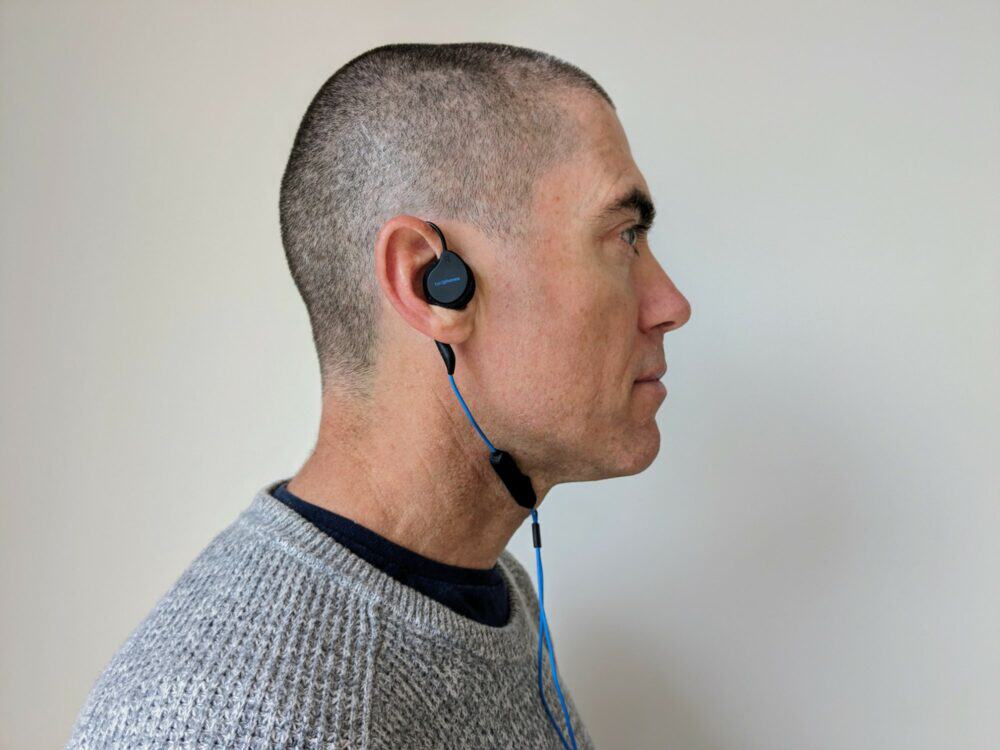
A simple remote control on one cable lets you skip tracks, change volume settings, pause or play a track, and answer a call (there’s a microphone on the remote). It’s all easy enough to figure out when fumbling around in the dark, which is about all I ask for from these sorts of headphones.
The sound from these things is actually pretty good; better than the Sleep A10 (above) both in terms of how loud they go and what the audio quality is like. Don’t get me wrong, you’re still unlikely to choose them as your do-everything headphones, but there’s at least a hint of depth to music and voices.
The downside of the Bedphones, and any other headphones that sit on rather than in the ear canal, is that they do little to block out external sound. If you sleep with a snorer or have noisy neighbors, you’ll have to turn the volume up quite loud to drown them out, which may keep you awake anyway.
I found them completely fine when sleeping in a quiet room; the podcast playing in my ears was enough to distract me from the odd car driving past. When the pub down the road had live music thumping one Saturday night, however, I found myself reaching for the QuietOn’s (above) pretty fast.
As a result, these wouldn’t be my first pick for anyone looking to block out a lot of outside noise while sleeping. If you just need to listen to a bit of white noise or a really boring podcast to help you drift off, however, I’ve found them to be an easy, effective, and comfortable way of doing so.
The company also makes a wired version of the Bedphones, which is a bit cheaper. If you’re connecting to a device without Bluetooth, or are really looking to save money, by all means go for that one. Otherwise I’d choose the wireless model every time: call me weird, but I enjoy not being choked by my headphones.
Like to know more? I reviewed the Bedphones in depth here.
Pros
Cons
Best Bluetooth Headband: SleepPhones
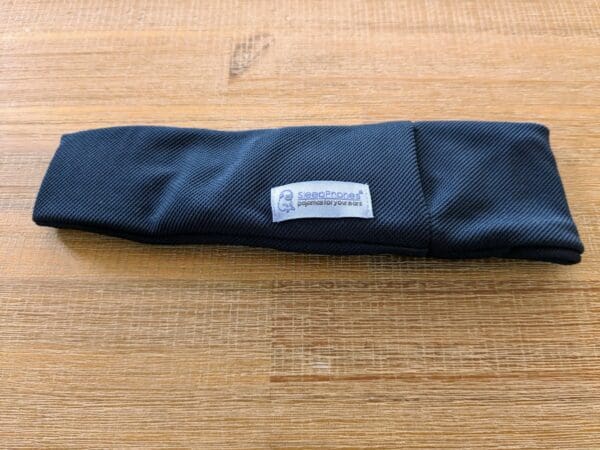
If you’re wanting to drift off to music, white noise, or something else without disturbing other people, you’ve got two basic choices: something with wires, and something without. There are pros and cons to both: wired versions are cheaper and won’t run out of battery, wireless ones won’t strangle you in the night.
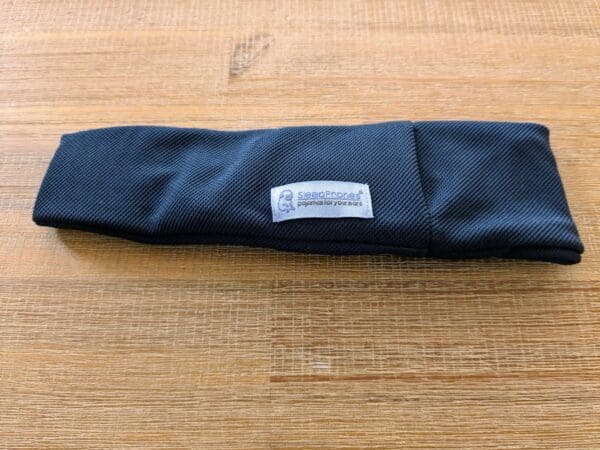
The SleepPhones, made by delightfully-named Acoustic Sheep, offers both options. One of the pioneers of headbands that help you sleep, the basic approach is similar regardless of which version you get. A fitted headband holds a pair of flat speakers, which can be moved around to align with your ears as needed.
Headbands like these are typically the most comfortable option for people who sleep on their side or front, and you can also pull them down over your eyes to block out the light in bright rooms. SleepPhones come in a choice of two fabrics (fleece for comfort, moisture-wicking for hot climates,) three sizes, and a range of colors.
The flat, rubberized Bluetooth module also sits inside the headband, aligned with your forehead. I wasn’t sure how comfortable it would be, but it doesn’t move around in the night: as long as I had it in the right place before I fell asleep, I didn’t feel it.
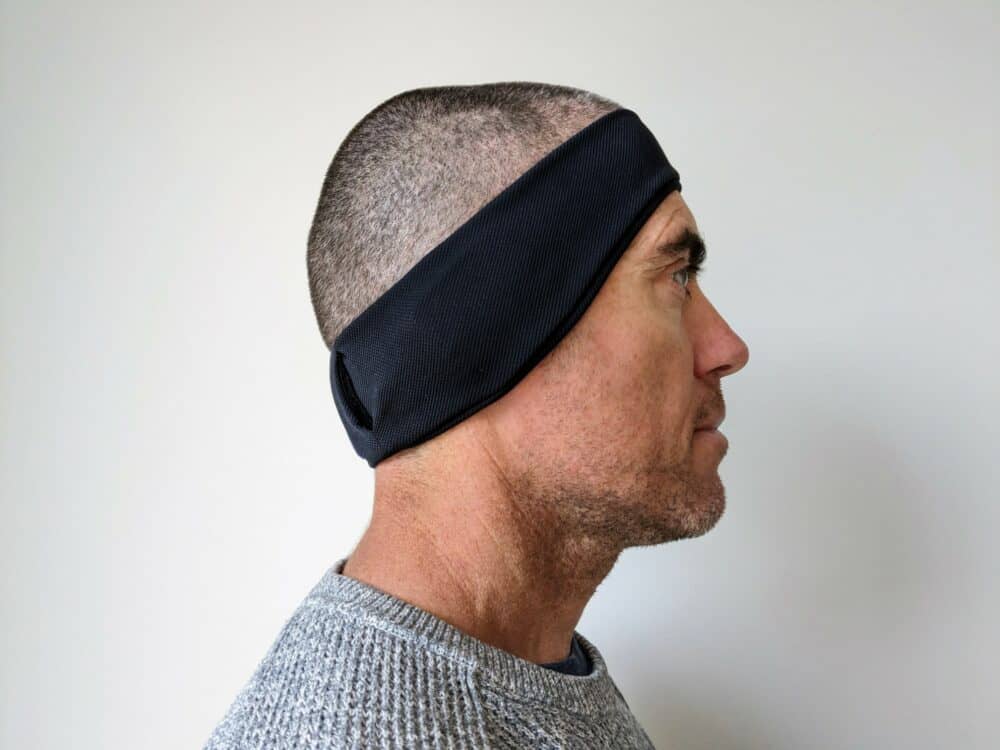
The module has a battery life of up to 24 hours. To charge, you slide it out of the band, unplug the existing cable, and connect a charging cable instead. It’s a bit fussy, but it works well enough. Like the Bedphones (above), you charge via a micro-USB socket, which feels outdated these days.
I reviewed the wired version of the SleepPhones a few years ago, and passed them onto my girlfriend when I was done. She got a lot of use out of them, at least until the cable broke after a year or so of tossing and turning in her sleep. I definitely prefer the wired model, even if I have to charge it every day.
The small flat speakers are designed for comfort over crisp midrange or booming bass. The goal is helping you sleep, after all, not appreciating the nuances of Handel’s Messiah. That said, they’re fine for podcasts and ambient music, and there’s plenty of volume if you need it.
There isn’t much in the way of noise isolation, though, so you’ll struggle to drown out loud environments without turning it up so high that it’ll keep you awake anyway. It’s fine in quieter rooms, though, and I had no complaints from my other half about sound leakage at normal sleeping volume.
Easy to use and comfortable to wear, the SleepPhones Wireless headband is a practical sleep “earbud” option for a wide range of insomniacs. You can read my full review of it here.
Pros
Cons
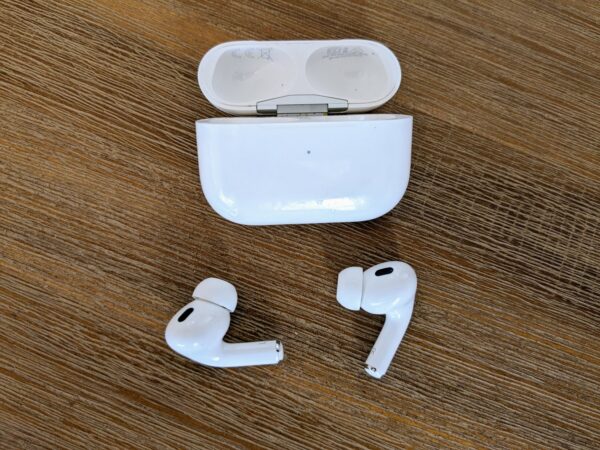
Best Wireless Earbuds: Apple Airpods Pro 2
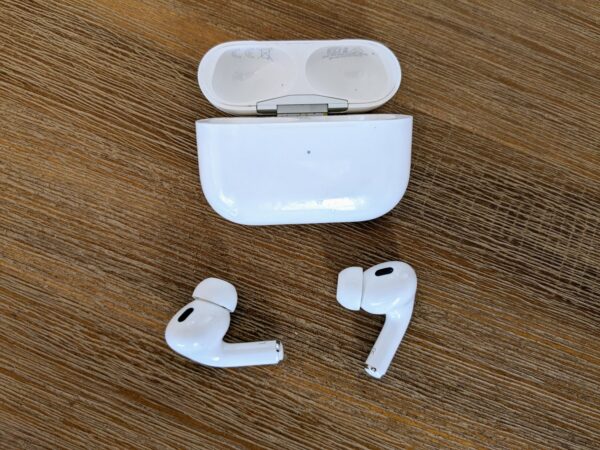
Recommending general-purpose wireless earbuds for sleeping is tricky, as you’ll need to compromise somewhere. You can have small size, long battery life, proper noise cancelation, or decent comfort levels, but right now, you can’t have them all.
Of the (many) such earbuds that I’ve tried to use while sleeping over the years, Apple's Airpods Pro 2 are the best (or least-worst) general purpose wireless earbuds earbuds I’ve found. That’s mainly because they’re smaller and more comfortable to lie on than their direct competitors, with good noise cancelation as well.
They’re obviously also an impressive set of true wireless earbuds in their own right. I’m not going to go into a full review of their features here since that’s not the purpose of this article, but suffice it to say that they’ve been near the top of most best-of lists since they were released.
For a while they were the only noise-canceling earbuds I owned, so I tried to make them work as a sleep aid for about six months. For me, they were reasonably comfortable and the noise cancelation worked well as long as I kept both earbuds in, but they suffered from one major issue: battery life.
At no more than six hours, they simply didn’t last all night. To make matters worse, they announce their low-battery situation with a loud tone that usually woke me up… just in time to need to charge them again.
Even so, for the last few years my partner has been using her set to listen to podcasts as she falls asleep. She’ll generally only wear one of them, in the ear that’s not on the pillow, but we live in an inner-city neighborhood: on particularly noisy weekend nights, she’ll use them both and sleep just fine.
If you sleep on your back and don’t move around much, being able to comfortably lie on your earbuds for long periods is less of a concern. In that case, it’d be worth considering Sony's WF-1000XM5 instead. Their larger size corresponds with a larger battery, and you’ll get a full eight hours of noise-canceling goodness before they go flat.
Pros
Cons
Get regular updates from the world of travel tech and remote work
News, reviews, recommendations and more, from here and around the web
Tip for Side Sleepers: Use a Pillow With a Hole!
![The Original Pillow with a Hole - Your Ear's Best Friend [Made in England]](https://toomanyadapters.com/wp-content/plugins/aawp/public/image.php?url=YUhSMGNITTZMeTl0TG0xbFpHbGhMV0Z0WVhwdmJpNWpiMjB2YVcxaFoyVnpMMGt2TXpGNE9GSmtVbXB1V2t3dWFuQm58MTc2NTA5NTc1Nw=)
As I’ve mentioned a couple of times already, having anything sitting in or on your ears can be a problem for those of us who sleep with an ear on the pillow. Even the smallest earbuds designed specifically for sleeping can still be uncomfortable when pressed firmly into your ear canal.
I’ve found that switching to a softer pillow helps quite a bit, but that’s not much use if you really prefer a harder version. There is a middle ground, though: a pillow with a hole in it. It sounds like a manufacturing defect, but in this case, it’s definitely not.
Originally intended for those recovering from ear surgery or dealing with painful conditions, the circular hole in the middle works just as well for dealing with the discomfort of lying on an earbud for several hours.
Hypo-allergenic and with removable stuffing to adjust the height and firmness, the P.W.A.H. (as it’s known) is comfortable and works surprisingly well despite its odd appearance.
Traveling and can’t fit a pillow in your carry-on? A fabric-lined travel version like this offers similar benefits in a smaller, cheaper package. It isn’t as comfortable as a normal pillow, though, so be sure to test it out before relying on it during a trip.
Main image via S L. QuietOn 3.1, Soundcore A10, Bedphones, Airpods, and SleepPhones images via author, other images via Amazon





I’ve got a pair of cheap Encafire wireless earphones from Amazon that I use for sleep.
They aren’t noise cancelling but they are small and snug and do stay in for a while.
I normally fall a sleep listening to an audiobook and use the sleep timer to automatically pause it after xx minutes.
If I wake in the night I usually tap the Earbud to start the story again.
It’s not perfect h but it sort of works!
I sympathize, but am surprised you made no mention of one of the oldest sleep aids ever, the Marsona Sound Conditioner. I’ve been using one since 1987 and my biggest fear while traveling is that I’ll forget to pack it (I have several, so I actually pack one days ahead of a trip). The basic ones start around $65 and they come with dual voltage power for use anywhere. In fact, they even have a battery option if one gets stuck without electricity. I crank mine up on the waterfall setting and there’s little noise that it can’t block.
I’ve used a couple of different devices like this in the past, although not this specific one — I didn’t mention them in the article because it was focused on earbuds/earphones rather than standalone devices. I’ve found them somewhat good for blocking out low to moderate amounts of noise (obviously while sleeping alone or with an understanding partner rather than in a shared dorm etc), but the lack of noise isolation or canceling meant they didn’t really work for me in loud environments. Glad to hear they work for you though — and especially that they work well enough to justify owning several!
Thanks for writing this article, Dave.
Do you know if Sony WF-1000 XM4 or XM3 ear tips can be used on the QuietOn 3? I frequently disinfect my silicone XM3 ear tips with rubbing alcohol with no problem, and I don’t see how I can do that with the stock foam ear tips QuietOn 3’s.
I don’t have any of the Sony tips to hand to check, but I’d be a bit surprised if you could use them on the QuietOn 3. It’s probably best to contact the company via their website to ask that question.
I have a variety of headphones for all ocations and at the end I found out that the Jabra 75t with software based anc and a good fitting tips are my favorite , they are small enough for side sleepers , the battery goes for longer time than apple pro and you can find them for a relative good price. I set a Spotify playlist for sleeping and usually has piano music and Narada collection new age music
They look relatively large for side sleeping, so I’m a bit surprised you find them comfortable, but it’s great that you do. The rated battery life is a bit better than the Airpods Pro, but still not long enough to get through the night — please tell me that Jabra is smarter than Apple, and that the 75t’s don’t make an annoyingly-loud low battery sound!
For anyone reading this that is dealing with a loud environment (snoring, neighbors, study area, whatever): you do not need expensive noise cancelling headphones or earbuds. Buy the 3M X5A or 3M X4A hearing protection headset (both relatively inexpensive), and buy cheap wireless earbuds that you’ll wear inside. The 3M X5A is ridiculously quiet, and if you combine that with earbuds producing music inside the head gear, say goodbye to external noise. It takes an extraordinarily loud noise to get through that – you can’t hear someone talking right to your face.
Oh and if you’re a side sleeper, combine it with a travel pillow with a hole in the middle, that’s where the cup of the headset ear piece goes.
I can’t imagine a set of industrial-grade earmuffs like this ever being comfortable enough to wear to bed, but I guess maybe they might work for someone.
This is a really great article. I had not weighed battery life enough when I got my first set. Soundcore A10s were super comfortable (no irritation after a full night), however what’s the point of labeling as ‘sleepwear’, if they can’t make it to 8hrs.
My QuietOn sleepbuds are on their way, hoping, hoping…
Once a year I research sleep earbuds, hoping we’ve reached that Holy Grail of comfort, ANC, battery life, etc. It sounds like we aren’t quite there yet, but I appreciate your well-considered reviews and articulate piece!
Thanks for the kind words! You’re right, we’re not quite there yet in terms of that holy grail — each new model seems to inch a bit closer, but at the moment the trade-off seems to be between maximum comfort and maximum noise-blocking. You can choose one or the other, but as of today, not both if you sleep on your side/front.
Great recommendations. I’ve been struggling to find comfortable earbuds for sleeping, and your guide highlighted some options I hadn’t considered. Thanks!